
On this page
Leaving a missing tooth unreplaced is rarely urgent, but over time it tends to change the mouth around the gap. Cleveland Clinic lists jawbone loss, shifting teeth, extra pressure on the remaining teeth, a changed bite, speech changes and jaw-joint problems among the complications of untreated tooth loss. None of these is certain for any one person, and the right moment to act depends on which tooth is missing and what your own scan shows.
It is also very common. Cleveland Clinic states that around 178 million adults in the United States have lost at least one tooth, and around 40 million have lost all of them.
What changes around a gapLink to this section: What changes around a gap
Cleveland Clinic's list of complications is the clearest summary:
- Jawbone loss. The jawbone can shrink where the tooth used to be.
- Shifting teeth. Neighboring teeth can drift toward the space.
- Extra pressure on the remaining teeth. The same chewing work is done by fewer teeth.
- Malocclusion. That is a bite that no longer meets properly.
- Cosmetic changes, such as a visible gap or facial sagging.
- Speech changes, mainly with front teeth.
- TMJ disorder, a problem with the jaw joint.
These can build on each other. Teeth that have drifted can be harder to clean, and a bite that has shifted can make a later bridge or implant more involved than it would have been.
The bone is the part you cannot seeLink to this section: The bone is the part you cannot see
The American Association of Oral and Maxillofacial Surgeons notes that the loss or extraction of a tooth can alter the surrounding bone. Cleveland Clinic describes the result when it lists the advantages of implants: jawbone preservation, which it says prevents the sunken appearance that happens when your jawbone shrinks following tooth loss.
This matters for a practical reason. Cleveland Clinic states that the main requirement for an implant is enough healthy bone in the jaw for it to take hold. Bone that has thinned can often be rebuilt, and when bone grafting is needed explains how, but grafting adds a step and healing time. Someone who waits years is not shut out of implants. Getting implants after years of dentures and what to do if you were told you lack bone both cover that situation.
Does it matter which tooth?Link to this section: Does it matter which tooth?
Yes, and this is where an honest answer differs from a sales pitch.
- A front tooth is usually replaced for appearance and speech, and people rarely choose to leave it.
- A back tooth is easy to live without at first, because nobody sees it. Back teeth do most of the chewing, though, so the effects on neighboring and opposing teeth can matter more over time.
- A wisdom tooth is the standard exception. They are removed routinely and not replaced.
- Several teeth in a row shift more work onto what remains than a single gap does.
A dentist looking at your bite can tell you whether a particular gap is stable. Asking "what happens if I do nothing for now?" is a fair question, and you should get a specific answer rather than a general warning.
Your options, including waitingLink to this section: Your options, including waiting
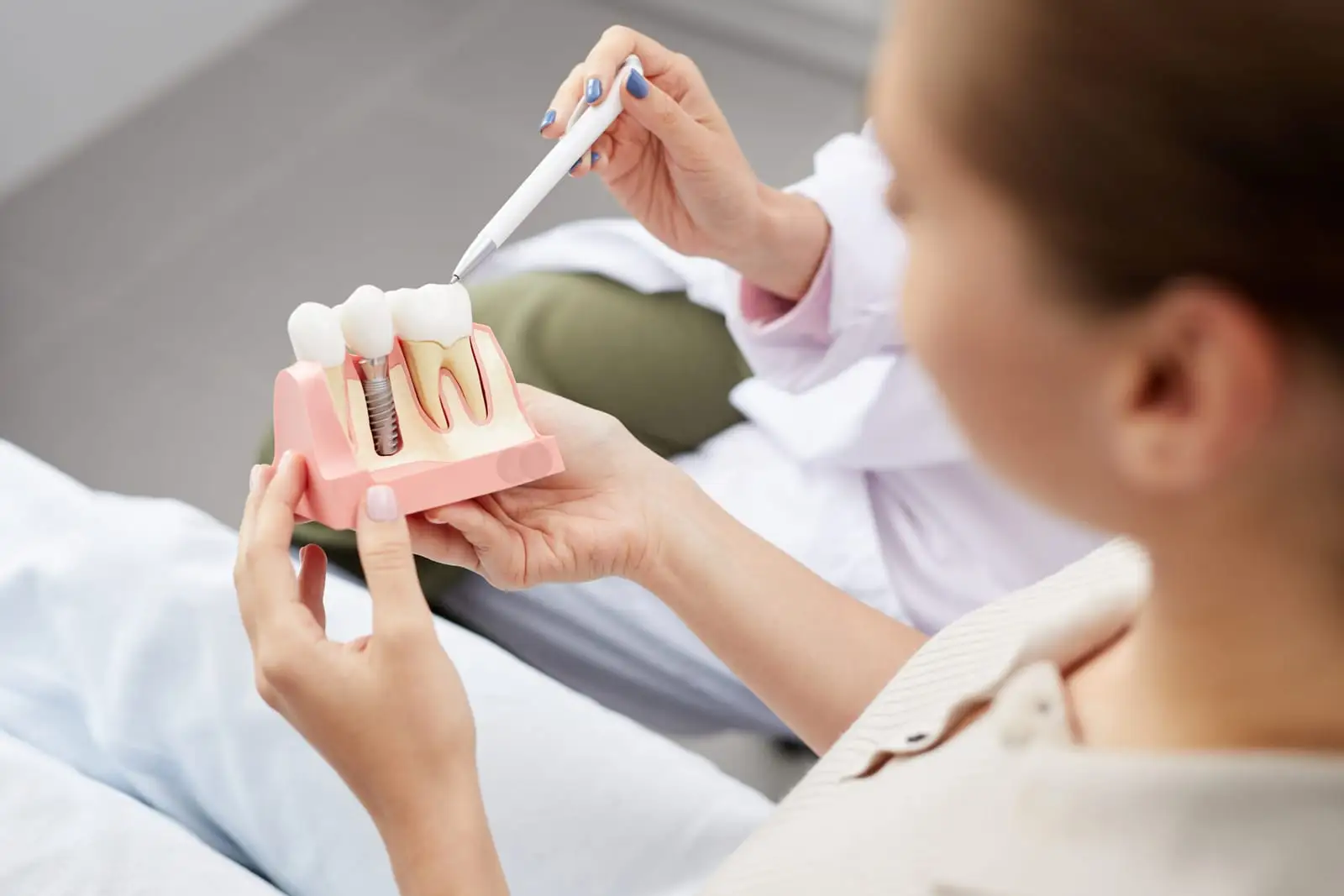
Cleveland Clinic names three treatments for tooth loss: dental implants, bridges and dentures.
- An implant replaces the root and carries a crown. Cleveland Clinic calls implants the closest thing to natural teeth and says they last longer than any other replacement option. The AAOMS adds that, unlike bridges or dentures, implants are not likely to affect neighboring healthy teeth or lead to bone loss in the jaw.
- A bridge is anchored to the natural teeth on each side of the gap. Cleveland Clinic says bridges last about five to 15 years on average. Implants versus bridges compares the two properly.
- A denture, partial or full, is removable. Cleveland Clinic gives an average of about seven to 10 years. See implants versus dentures.
- Waiting is a choice too, and sometimes a sensible one, for example while a health condition is brought under control or while you save for treatment. If you wait, ask whether anything should be done to hold the space and how often the area should be checked.
Cost is a real reason people leave a gap. The dental implant cost guide explains what drives the price, and implant versus bridge cost over time looks at the longer view.
For a second explanation of the same choice, Rio Hondo Dental, the affiliated office in Downey, publishes its own comparison of implants, bridges and dentures, and Marina Dentistry has a page on dentures and dental bridges. Readers on the Westside can also find implant information for that area at Dental Implants Marina Del Rey.
Why the tooth was lost matters as much as the gapLink to this section: Why the tooth was lost matters as much as the gap
Cleveland Clinic states that gum disease is the leading cause of tooth loss among adults, and that without treatment tooth loss can lead to more teeth being lost. If the tooth went because of gum disease or decay, the cause is still present after the tooth is gone, and it affects any replacement you choose. Implants and gum disease explains why it is treated first. Beachside Dental Group's gum care and periodontics page describes that treatment at the Huntington Beach office.
Cleveland Clinic's prevention advice for the teeth you still have is plain: brush twice a day with a soft brush and fluoride toothpaste, floss once a day, keep up with exams and cleanings, and wear a mouth guard if you grind your teeth or play contact sports.
What to ask at your consultationLink to this section: What to ask at your consultation
- Is this gap stable, or are the teeth around it already moving?
- What does the scan show about the bone where the tooth was?
- If I wait a year, what is likely to change, and would it make treatment harder?
- Which of the three options do you think suits this tooth, and why?
- Is there anything I should do to hold the space in the meantime?
- What caused the tooth to be lost, and is that under control?
Next stepLink to this section: Next step
The useful first step is finding out what your own gap is doing, which takes an exam and imaging rather than a decision. Request a consultation at a Huntington Beach office, and read the dental implant alternatives guide so you arrive knowing the full range of options.
Quick answers
Is it bad to leave a missing tooth unreplaced?
It depends on the tooth, but a gap is not neutral. Cleveland Clinic lists jawbone loss, shifting teeth, extra pressure on the remaining teeth, bite changes, speech changes and TMJ disorder among the complications of untreated tooth loss. A dentist can tell you whether your gap is stable.
Does the jawbone shrink after a tooth is lost?
It can. Cleveland Clinic describes the jawbone shrinking following tooth loss, and lists jawbone preservation among the advantages of implants. The American Association of Oral and Maxillofacial Surgeons also notes that the loss of a tooth can alter the surrounding bone.
Have I waited too long to get an implant?
Usually not. Cleveland Clinic states that the main requirement is enough healthy bone for the implant to take hold, and that bone grafts can be used where bone is lacking. Waiting can add steps to treatment, but an exam and scan are the only way to know.
Do I need to replace a back tooth nobody can see?
Not always, but back teeth do most of the chewing, so a gap there can affect the teeth around and opposite it. Wisdom teeth are the usual exception and are not replaced. Ask your dentist what is likely to happen if you leave it.
How common is it to be missing a tooth?
Very. Cleveland Clinic states that around 178 million adults in the United States have lost at least one tooth, and around 40 million have lost all of their teeth.
Sources
This article is general dental education, not personal medical advice — diagnosis and treatment recommendations always require an examination at an affiliated office.