
The complete guide
Dental implants, explained from first question to final teeth
A dental implant replaces the root of a missing tooth with a post anchored in the jaw, so a crown, bridge or denture can be attached to it. This guide walks the whole journey in order — bookmark it, and open any step for the detailed guide.
By DICHB editorial teamPrepared from established dental references · clinical review by Dr. Sameer Aljanedi pendingPublished
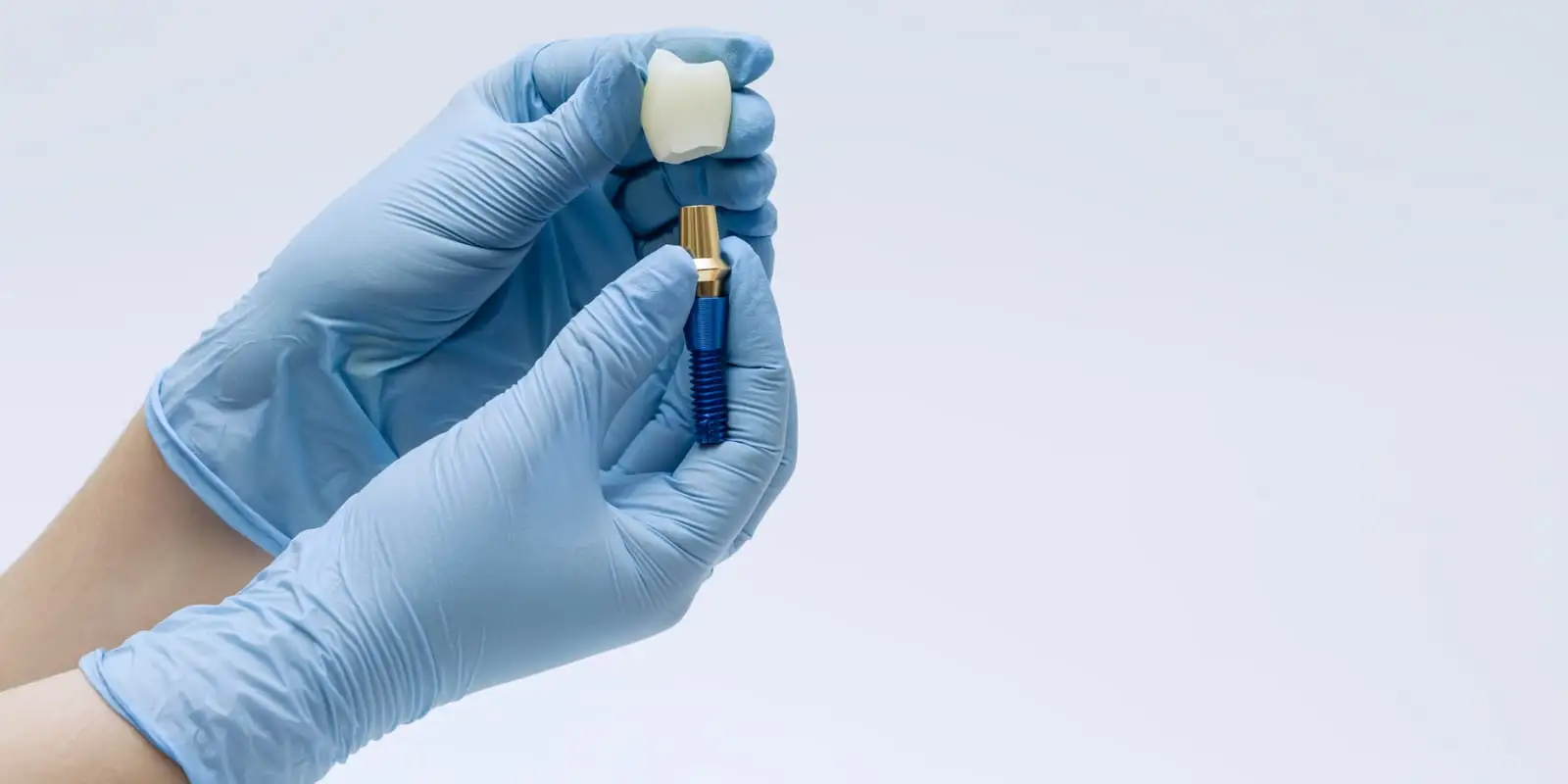
What a dental implant is
A small titanium (or zirconia) post placed in the jaw to act as a root. A connector called an abutment joins it to the visible tooth — a crown, a bridge, or an attachment for a denture. Three separate parts; three separate line items on a quote.
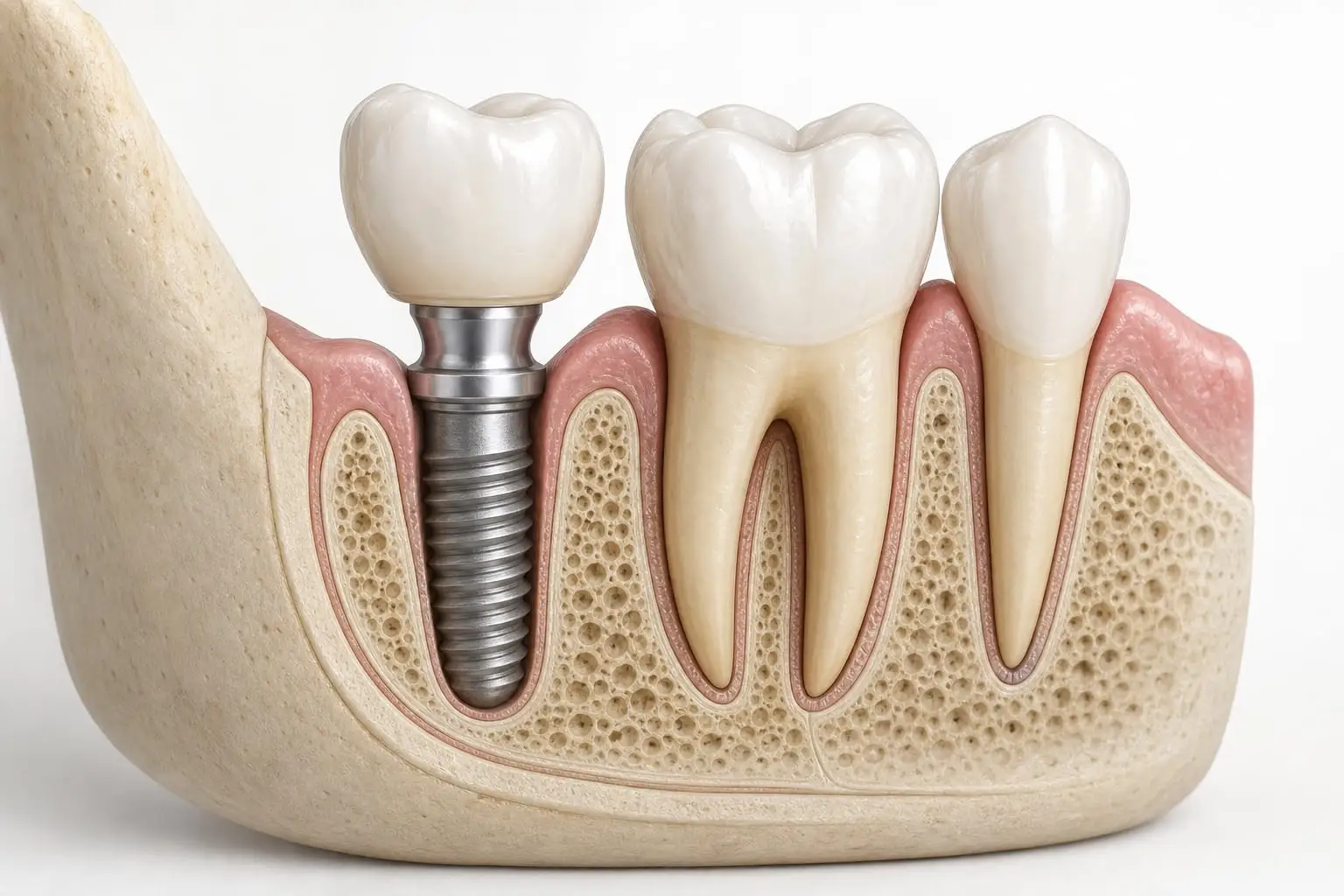 Illustration for education — not a patient case
The parts, labeled
- Crown
- Abutment
- Implant (fixture)
- Jawbone
- Gum (soft tissue)
The solutions
One implant and crown for one tooth. An implant bridge for several teeth in a row. A snap-in overdenture on two to four implants for a loose denture. A fixed full-arch bridge (All-on-4 / All-on-X) on four to six implants for most or all teeth.
Multiple teeth Implant-supported dentures Full-arch Full-mouth
Who may qualify
Adults who have finished growing, with enough healthy bone (or a plan to rebuild it), healthy gums, and general health that supports healing. Smoking and vaping, uncontrolled diabetes, untreated gum disease and some medications raise the risks and are discussed at the consultation — health matters more than age.
Scans and planning
A 3D cone-beam scan shows bone height and width, nerve and sinus positions, and lets the dentist plan implant positions — sometimes with a printed surgical guide. This is where 'not enough bone' becomes a measurement instead of a verdict.
Bone grafting
When the jaw has shrunk after tooth loss, graft material rebuilds it: socket preservation at extraction, ridge augmentation, or a sinus lift for upper back teeth. Grafts need months to mature before or alongside implant placement — and many patients don't need one.
Placement
Done with local anesthesia, with sedation options for anxious patients or longer visits. The implant is placed in a prepared site in the bone and the gum is closed. Provisional teeth may be fitted the same day for qualifying full-arch cases; single implants usually wait.
Healing and integration
Soreness and swelling ease over days; the bone fuses to the implant (osseointegration) over months — Cleveland Clinic describes three to nine. Soft foods early, careful hygiene throughout, and a call to the office for bleeding or swelling that worsens.
The final teeth
Once integrated, the abutment is attached, an impression or digital scan is taken, and the crown, bridge or denture attachment is made and fitted. Materials — acrylic, composite, zirconia — change both the look and the price.
Living with implants
Brushing, flossing or a water flosser, and regular professional cleanings protect the gum and bone around the implant. Peri-implantitis — gum disease around an implant — is the main long-term risk and is largely preventable.
Cost
A quote is the sum of its parts: implant, abutment, crown, imaging, extractions, grafting, sedation, materials. Offices in this network publish a few fixed offers; everything else is itemized after the consultation.
Financing
Third-party plans (CareCredit, Cherry, Sunbit) with promotional 0% periods and longer terms subject to approval, in-house membership plans for the uninsured, insurance coordination, and phased treatment to spread the cost.
Risks
Infection, nerve or sinus involvement, failure to integrate, and later peri-implantitis are the honest list. They are uncommon with good planning and hygiene, and higher with smoking, uncontrolled diabetes and poor oral hygiene.
Alternatives
Bridges, partial dentures, full dentures and resin-bonded bridges are real options with lower upfront cost — and real trade-offs in bone preservation and longevity. Sometimes one of them is the right answer.
Questions to ask
How many cases like mine; who places and who restores; which imaging; what brand and will I get the records; what if it fails; what exactly is itemized in the quote. Good dentists welcome the list.
How to schedule
Request a consultation on this site and choose an office — Beachside Dental Group or Pacifica Dental in Huntington Beach, Marina Dentistry, or Rio Hondo Dental. The office confirms within one business day.
Glossary
The words you'll hear at the consultation
- Implant (fixture)
- The threaded post, usually titanium, placed in the jawbone to act as an artificial root.
- Abutment
- The connector attached to the implant that supports the visible tooth or denture attachment.
- Crown
- The custom tooth-shaped restoration fixed to the abutment; the part you chew with.
- Osseointegration
- The process by which bone grows onto and fuses with the implant surface over months.
- Bone graft
- Material placed to rebuild jawbone that has shrunk; may be your own bone, donor, animal-derived or synthetic.
- Sinus lift
- A graft that adds bone height beneath the maxillary sinus so upper back implants have enough support.
- Full arch / All-on-4 / All-on-X
- A fixed bridge replacing an entire upper or lower set of teeth on four or more implants.
- Implant-supported (snap-in) denture
- A removable denture retained by attachments on two to four implants.
- Immediate placement
- Placing an implant in the socket at the time of extraction, when conditions allow.
- Provisional teeth
- Temporary crown, bridge or denture worn while the implant integrates.
- CBCT
- Cone-beam computed tomography — the 3D scan used to measure bone and plan implant positions.
- Peri-implantitis
- Inflammation and bone loss around an implant, driven by bacteria — the main long-term risk.
Quick answers
- How long does the dental implant process take?
- Commonly several months from placement to final restoration, because the implant needs time to fuse to the bone. Extractions, grafting and healing between stages extend that; some full-arch cases receive provisional teeth on placement day.
- Does getting a dental implant hurt?
- Placement is done with local anesthesia, with sedation options available at the affiliated offices. Afterward, soreness managed with the medication your dentist recommends typically eases over several days.
- How much do dental implants cost?
- It depends on the parts your case needs — implant, abutment, crown, imaging, extractions, grafting, sedation. Beachside Dental Group publishes a $699 implant-placement offer (abutment, crown and sedation separate) and a free consultation; your total is itemized at the consultation.
- Can dental implants fail?
- Yes, though it is uncommon with good planning and care. Early failures involve the implant not integrating; later problems are usually peri-implantitis. Smoking, uncontrolled diabetes and poor hygiene raise the risk.
Read the full dental implant FAQ →
Sources
Ready to find out which option fits your mouth?
Request a consultation at an affiliated Huntington Beach office. You'll leave with an itemized, written plan — and no obligation to proceed.