
What Happens at a Dental Implant Consultation
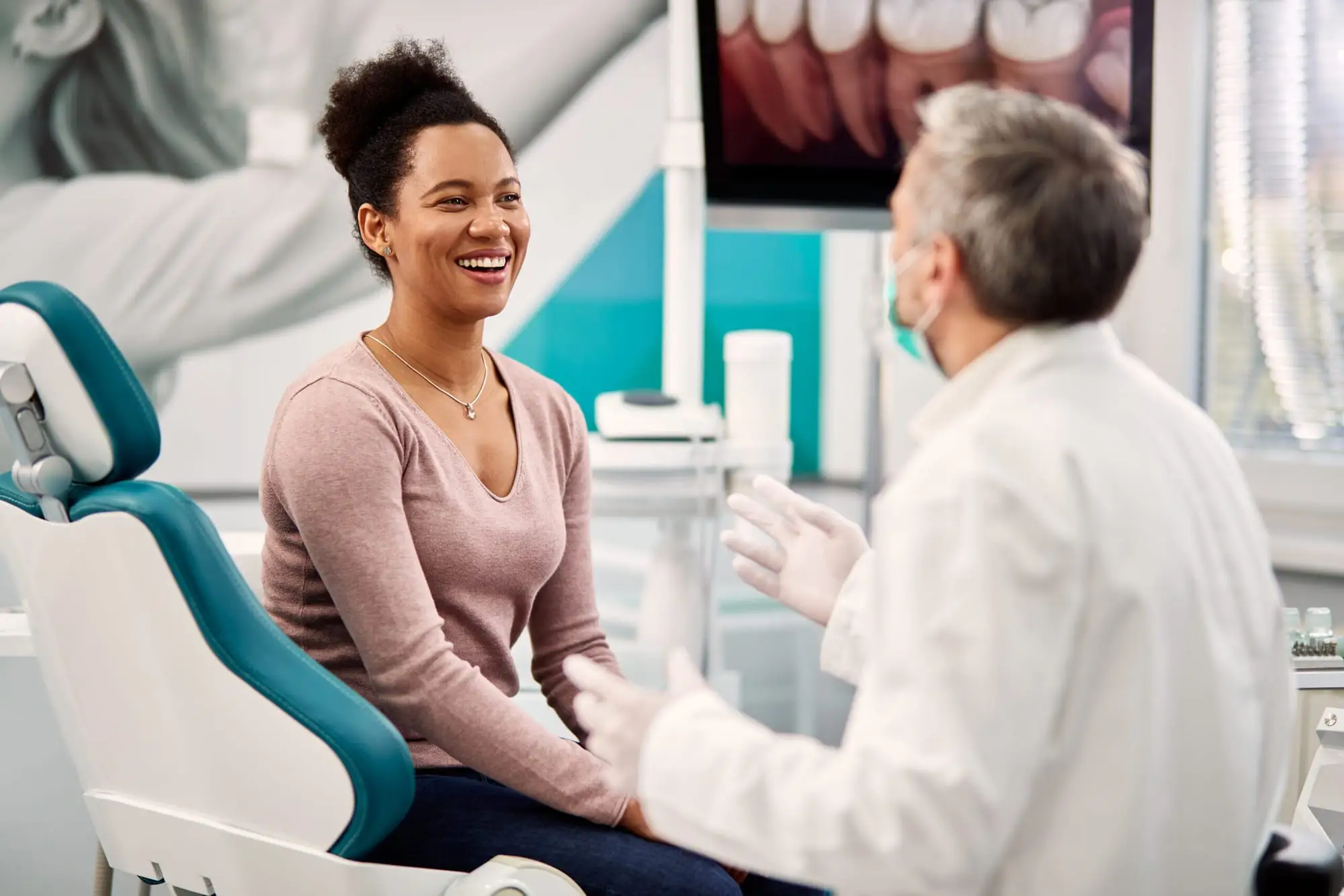
An implant consultation is a diagnostic visit: the dentist reviews your medical history, examines your teeth, gums and bite, takes X-rays and usually a 3D scan, and measures your bone. You leave with a written plan, itemized pricing and your options, or a clear list of what needs to happen first.
By DICHB editorial teamPrepared from established dental references · clinical review by Dr. Sameer Aljanedi pendingUpdated
- Purpose
- A diagnostic visit: exam, imaging, medical review, and a written plan with pricing.
- Imaging
- Standard X-rays plus, in most implant cases, a 3D cone-beam scan to measure bone.
- Main requirement
- Cleveland Clinic: enough healthy jawbone for the implant to take hold.
- Medical clearance
- ADA: you may be medically evaluated by a physician before surgery is scheduled.
- Beachside offer
- Free consultation including full-mouth X-rays and exam; new patients, terms may change.
- Obligation
- None. A consultation can end with a plan, a referral, or a decision to wait.
On this page
The short versionLink to this section: The short version
An implant consultation is a diagnostic visit, not a sales appointment. The dentist reviews your health history, examines your teeth and gums, takes X-rays and usually a 3D scan, and measures whether you have the bone to hold an implant. You leave with a written plan and itemized pricing, or with a clear list of what needs to happen first. The American Dental Association advises discussing implants carefully with your dentist before deciding, and that is exactly what this visit is for.
What the dentist reviewsLink to this section: What the dentist reviews
Medical history and medicationsLink to this section: Medical history and medications
Expect detailed questions about your general health. The ADA notes that chronic illnesses such as diabetes or leukemia may interfere with healing after surgery, that tobacco use can slow healing, and that you may be medically evaluated by a physician before any implant surgery is scheduled. Bring a current list of medications and supplements; some affect bleeding or bone healing and change how the surgery is planned. A history of radiation to the head or neck, or medications taken for osteoporosis, should be mentioned even if they seem unrelated to teeth.
Teeth, gums, and biteLink to this section: Teeth, gums, and bite
The dentist looks at the tooth or space in question, the neighboring teeth, and the condition of your gums. Cleveland Clinic lists active or untreated gum disease, extensive tooth decay, and poor oral hygiene among the reasons implants may not be a good idea yet, so these are checked before anything else. Your bite matters too: heavy clenching or grinding loads an implant differently from a natural tooth and may call for a night guard as part of the plan.
X-rays and a 3D scanLink to this section: X-rays and a 3D scan
Standard X-rays show the teeth and the outline of the jaw. A cone-beam CT scan adds the third dimension: bone height, bone width, the position of the nerve in the lower jaw, and the floor of the sinus in the upper jaw. Beachside Dental Group in Huntington Beach lists 3D imaging for implant planning, as does Rio Hondo Dental in Downey. An article explains how implants are planned with 3D imaging if you want to understand what the dentist is looking at on screen.
Bone volume and gum healthLink to this section: Bone volume and gum health
Cleveland Clinic describes enough healthy jawbone as the main requirement for an implant, and notes that where bone is lacking, the provider may need to place bone grafts to build it up. The scan answers that question directly. If grafting is needed, the consultation is where you learn which type, how it changes the timeline, and what it adds to the cost. The bone grafting guide covers the options in depth.
What you should leave withLink to this section: What you should leave with
A good consultation ends with three things in writing:
- A treatment plan that names the teeth being replaced, the number of implants, any extractions or grafting, the type of final restoration, and a realistic timeline.
- Itemized pricing that separates the implant, abutment, crown or prosthesis, imaging, extractions, grafting, and sedation, so you can see what each stage costs and when it is due.
- Your options, including alternatives such as a bridge or a removable denture, and the trade-offs of each for your situation.
If you are told you are not a candidate right now, you should also leave knowing why and what would change that: treating gum disease, stabilizing a medical condition, stopping smoking, or grafting. The candidacy guide explains each of those in detail.
What to bringLink to this section: What to bring
- A list of current medications and supplements, with doses.
- The names of any physicians treating ongoing conditions.
- Recent dental X-rays or a prior treatment plan, if you have them.
- Your dental insurance card, if you have coverage, so benefits can be checked.
- Any questions written down in advance.
Questions worth askingLink to this section: Questions worth asking
- How many implants do I need, and why that number?
- Will I need an extraction, grafting, or a sinus lift first?
- Is immediate placement an option for me, or will the site need to heal first?
- Will I have a temporary tooth during healing?
- What does each line of the estimate cover, and what could change it?
- What would cause you to pause or change this plan?
- Who handles follow-up if something feels wrong after surgery?
The article on what to ask an implant dentist before treatment expands this list and explains what a good answer sounds like. The step-by-step process guide is useful to read beforehand so the stages in your plan are familiar.
How the free consultation at Beachside Dental Group worksLink to this section: How the free consultation at Beachside Dental Group works
Beachside Dental Group, at 18800 Main St Ste 110 in Huntington Beach, publishes a free consultation offer that includes full-mouth X-rays and an examination. It is a new-patient offer, cannot be combined with insurance or other offers, and may change, so confirm the current terms when you schedule. Rio Hondo Dental in Downey also advertises a free consultation. Requests made through the contact page are routed to the affiliated office you choose.
Beachside also publishes a new-patient implant placement offer of $699 that includes the exam and X-rays; the abutment, crown and sedation are not included and are quoted separately in your plan. The cost guide and the financing guide explain how the remaining line items and payment options typically work.
How to choose an officeLink to this section: How to choose an office
Choose the office where you can realistically attend several visits over many months. For most people reading this, that means Beachside Dental Group or Pacifica Dental in Huntington Beach, both in the same building at 18800 Main St. Marina Dentistry in Marina del Rey and Rio Hondo Dental in Downey serve patients closer to the Westside and the Gateway Cities. All four locations are led by Dr. Sameer Aljanedi, and all list sedation options. The locations page has addresses, phone numbers and published hours.
Beyond distance, judge the consultation itself. Did you get a written, itemized plan? Were alternatives explained? Were you told what could go wrong and what the office does about it? A consultation that answers those plainly is a good sign regardless of where it happens.
When the right answer is not yetLink to this section: When the right answer is not yet
Some consultations end with a recommendation to wait. Untreated gum disease, unmanaged diabetes, or an active infection at the site are reasons to treat those first. Cleveland Clinic notes that smoking or vaping can disrupt healing, so a plan to stop or pause is often part of the conversation. Delaying for the right reason is part of getting a result that lasts, and a good office will tell you when that is the honest recommendation.
Benefits
- You find out whether implants are realistic for you before spending anything on treatment
- A 3D scan shows exactly how much bone you have, so the plan is based on measurement, not guesswork
- Itemized pricing lets you compare options and plan financing
- Alternatives are laid out, so you can weigh a bridge or denture against implants
- Problems such as gum disease are found early, when they are simpler to treat
Limitations & considerations
- A consultation is only as useful as the questions you ask; prepare them in advance
- The free-consultation offer is for new patients and may change; confirm terms when booking
- Some patients need a physician's clearance before a surgical date can be set
- If grafting or gum treatment is needed first, the timeline you leave with will be longer than you hoped
What the process looks like
Health history review
Medical conditions, medications, smoking or vaping, and prior dental work are discussed so risks to healing are identified early.
Clinical exam
The dentist examines the site, neighboring teeth, gum health, and how your teeth come together.
X-rays and 3D scan
Imaging measures bone height and width and maps nerves and sinuses. At Beachside the free consultation includes full-mouth X-rays.
Findings and options
The dentist explains what the images show, whether grafting or extractions are expected, and the alternatives to implants.
Written plan and pricing
You leave with a staged plan, an itemized estimate, and financing or insurance information to review at home.
Is it right for you?
Anyone missing a tooth, facing an extraction, or struggling with a denture can benefit from a consultation, even if implants turn out not to be the right choice. The visit is the point where candidacy is decided, so there is no need to pre-qualify yourself.
Often a good fit
- Adults missing one or more teeth who want a fixed replacement
- Patients with a failing tooth who want to plan the replacement before extraction
- Long-term denture wearers who want to learn about implant-supported options
- Patients previously told they lack bone who want a second opinion with a 3D scan
Worth discussing first
- Patients under 18 or still growing, who are typically asked to wait
- Anyone with an active dental infection, which is treated first
- Patients with unmanaged medical conditions, who may need physician input before a date is set
Questions people ask
How long does a dental implant consultation take?
Long enough to review your history, examine you, take images and discuss findings. Offices differ, so ask when you book. If the scan and exam raise questions that need a physician's input, the written plan may follow at a second visit.
Is the consultation at Beachside Dental Group really free?
Beachside Dental Group publishes a free consultation offer that includes full-mouth X-rays and an examination. It is a new-patient offer, cannot be combined with insurance or other offers, and may change, so confirm the current terms when you schedule.
Do I need a 3D scan, or are regular X-rays enough?
Regular X-rays show teeth and the outline of the jaw, but they cannot show bone width or the exact position of nerves and sinuses. Most implant planning uses a cone-beam scan for that reason. Your dentist will tell you whether one is needed for your case and whether it is included.
What if I am told I do not have enough bone?
That is a common finding, not a closed door. Cleveland Clinic notes that providers may place bone grafts to build up areas of bone loss. The consultation should explain which graft, how it changes the timeline, and what it costs. A second opinion with a 3D scan is reasonable if you were told no without one.
Should I bring someone with me?
It can help. A second set of ears makes it easier to remember what was said, and a family member can help weigh options. If sedation is planned for a later surgical visit, you will need a driver for that appointment, but not for the consultation.
Can I get a consultation if I already have a treatment plan from another office?
Yes. Bring the plan and any X-rays. Comparing two written, itemized plans is one of the clearest ways to understand what is being proposed and why prices differ.
Which office should I choose?
The one you can return to for several visits over many months. Beachside Dental Group and Pacifica Dental share a building in Huntington Beach; Marina Dentistry serves Marina del Rey and Rio Hondo Dental serves Downey. All four are led by Dr. Sameer Aljanedi.
Sources
This guide is general dental education and not a substitute for an examination or diagnosis. Treatment recommendations always depend on your individual evaluation at an affiliated office. How it was written and sourced: editorial policy.
Where the consultation happens
Two affiliated offices in Huntington Beach
Beachside Dental Group
Huntington Beach
Pacifica Dental
Huntington Beach
Also in the network: Marina Dentistry (Marina del Rey) and Rio Hondo Dental (Downey).
Talk through consultation with a dentist
Request a consultation at an affiliated Huntington Beach office. You'll leave with an itemized, written plan — and no obligation to proceed.