
Dental Implants vs. Dentures
Conventional dentures rest on the gums; implants anchor in the jaw, so implant teeth do not move when you chew or speak. Cleveland Clinic says implants can last a lifetime with care but are typically more expensive than dentures, which average seven to 10 years. An implant overdenture sits between the two.
By DICHB editorial teamPrepared from established dental references · clinical review by Dr. Sameer Aljanedi pendingUpdated
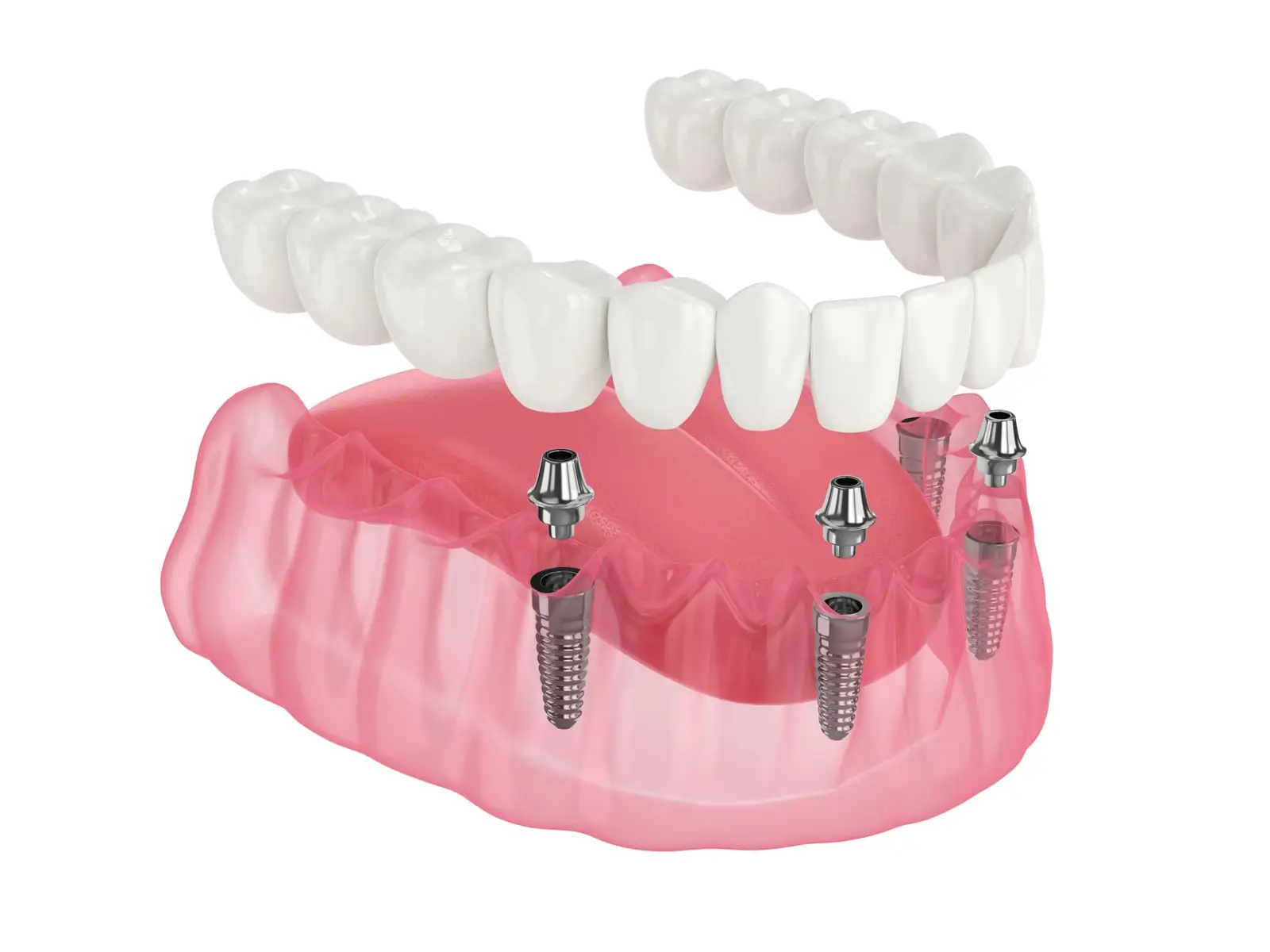
Illustration for education — not a patient case.
- Denture lifespan
- Cleveland Clinic: seven to 10 years on average, with a reline every one to two years.
- Implant lifespan
- Cleveland Clinic: can last a lifetime with proper care; typically more expensive than dentures.
- Bone
- The jaw gradually shrinks after tooth loss (Cleveland Clinic); implants are the only option that preserves bone (AAID).
- Chewing satisfaction
- Healthline: implant overdenture wearers reported more satisfaction with comfort and chewing efficiency.
- Denture cost
- Healthline: a complete upper denture averages a little more than $1,600; lower about the same.
- Middle path
- Implant overdenture on two to four implants; Rio Hondo lists overdentures on four implants.
On this page
The short answerLink to this section: The short answer
Conventional dentures rest on the gums and are held by suction, muscle control, and sometimes adhesive. Dental implants anchor in the jaw, so implant teeth — whether fixed or removable — do not shift when you chew or speak. Implants cost more up front and require surgery; dentures are faster and cheaper initially but need relines and eventual replacement as the jaw changes. Cleveland Clinic states that implants can last a lifetime with proper care but are typically more expensive than dentures, and gives the average denture lifespan as seven to 10 years.
Stability and chewingLink to this section: Stability and chewing
A full upper denture covers the palate and, when well made, seals reasonably well. A full lower denture has far less to hold onto — a horseshoe of gum ridge surrounded by the tongue and cheeks — and the lower is what most denture wearers struggle with. Implants change that. Healthline reports that people with implant-supported overdentures expressed more satisfaction with comfort and chewing efficiency than conventional denture wearers. Fixed full-arch implant teeth go further still, behaving much like natural teeth when biting into firmer foods.
Bone loss over timeLink to this section: Bone loss over time
This is the quiet difference. Cleveland Clinic notes that the jawbone gradually shrinks after tooth loss, which can lead to a sunken facial appearance. A denture does not stop this; it rides on whatever ridge remains, which is why the fit loosens over the years. Implants transmit chewing force into the bone, and the American Academy of Implant Dentistry describes them as the only restoration option that preserves natural bone. For someone who has already worn dentures for a long time, bone may be limited — the article on implants after years of wearing dentures explains what can still be done.
SpeechLink to this section: Speech
New dentures change how the tongue meets the palate and teeth. The ADA's MouthHealthy describes an adjustment period in which saliva flow temporarily increases and the denture may feel loose until the cheek and tongue muscles learn to hold it; those problems should ease as the mouth adapts. Implant-retained teeth reduce movement, and a fixed implant bridge can be made without covering the palate, which many patients find easier for speech and taste.
Daily care, adhesives, and relinesLink to this section: Daily care, adhesives, and relines
Dentures come out at night. MouthHealthy advises brushing them with a soft-bristle brush and a non-abrasive cleanser, cleaning the gums, cheeks, and tongue, and storing the denture in water so it does not warp. Adhesive should be used exactly as directed; needing more of it over time is usually a sign the fit has changed. Cleveland Clinic recommends a reline every one to two years, or whenever the fit changes.
Implant overdentures are also removed nightly and cleaned, and the attachments and the implants themselves are brushed. Fixed implant teeth stay in and are cleaned with a brush, floss threaders or a water flosser, and professional maintenance visits. Implants need the same gum-health discipline natural teeth do; the tissue around them can become inflamed if plaque accumulates.
Cost: upfront versus long-termLink to this section: Cost: upfront versus long-term
A conventional denture is the least expensive way to replace a full arch. Healthline states that the average cost of a complete set of upper dentures is a little more than $1,600, with a lower denture costing about the same. Implants for a full arch add surgery, four or more posts, and a prosthesis built over them, so the initial figure is several times higher. Against that, dentures incur relines, adhesive, and replacement every several years. The dental implant cost guide explains how implant fees are built, and the financing guide covers how they are spread out.
The middle path: an implant overdentureLink to this section: The middle path: an implant overdenture
An implant overdenture is a removable denture that snaps onto two to four implants. It uses fewer implants than a fixed bridge, is often possible with less bone, and usually sits between a conventional denture and a fixed full-arch in cost. It keeps the night-time removal routine but removes most of the movement. Rio Hondo Dental lists overdentures on four implants among its services. The full guide is implant-supported dentures, and the comparison with fixed teeth is in fixed implant teeth vs. removable implant dentures.
Who still chooses denturesLink to this section: Who still chooses dentures
- Patients who prefer to avoid surgery, or whose medical status makes healing unpredictable.
- People with extensive bone loss who do not want grafting; Healthline notes dentures can be fitted regardless of how much bone is present.
- Anyone for whom the upfront cost of implants is out of reach even with financing.
- Patients who need teeth immediately after extractions, where MouthHealthy describes an immediate denture inserted the same day — which may later be converted to an overdenture.
Choosing a denture is not a failure; it is a legitimate restoration that the affiliated offices provide. It simply comes with a maintenance calendar.
Who tends to do well with implantsLink to this section: Who tends to do well with implants
Good general health, adequate bone or willingness to graft, controlled diabetes, no smoking or a willingness to stop, and realistic expectations about the timeline. Cleveland Clinic lists untreated gum disease, severe bone loss, unmanaged diabetes, and active smoking or vaping as reasons someone may be a poor candidate. The guide to who qualifies for implants goes deeper.
DecidingLink to this section: Deciding
Because bone is the variable that decides most of this, a 3D scan is the starting point. A free consultation at Beachside Dental Group in Huntington Beach includes full-mouth X-rays and an examination, and is the right place to ask for conventional denture, overdenture, and fixed full-arch options priced side by side. Read about full-mouth implant options first if you want to arrive with questions, then request a consultation.
Benefits
- Implant teeth do not move during chewing or speech
- Implants preserve jawbone and facial support over time
- Fixed implant bridges can be made without a palate covering
- Conventional dentures are fast, non-surgical, and lowest in upfront cost
- An overdenture gives most of the stability for fewer implants
Limitations & considerations
- Implants require surgery, months of healing, and a larger upfront investment
- Dentures need relines every one to two years and replacement after several years
- Adhesive use tends to increase as the fit loosens
- Long-term denture wearers may have lost bone and need grafting before implants
What the process looks like
Exam and 3D scan
The dentist measures remaining bone and assesses gum health and any teeth to be removed.
Options priced side by side
Conventional denture, implant overdenture, and fixed full-arch are itemized in writing.
Denture route
Impressions, try-in, and delivery over a few visits; an immediate denture can be placed the day teeth are removed.
Implant route
Implants are placed, heal for months, and the overdenture or fixed bridge is attached; a temporary denture covers the gap.
Maintenance
Dentures are relined every one to two years; implants get professional cleaning and checks.
| Feature | Fixed implant teeth | Implant overdenture | Conventional denture |
|---|---|---|---|
| How it is held | Screwed to four to six implants. | Snaps onto two to four implants. | Suction, muscles, and adhesive. |
| Removable | Only by the dentist. | Yes, nightly. | Yes, nightly. |
| Chewing stability | Highest. | High; minimal movement. | Lowest, especially lower arch. |
| Bone stimulation | Yes. | Yes, at implant sites. | No; ridge keeps shrinking. |
| Palate coverage | None. | Often reduced. | Full upper palate. |
| Daily care | Brush, floss threaders or water flosser. | Remove, clean denture and attachments, brush implants. | Remove, brush, soak overnight. |
| Relines / adhesive | Not applicable. | Attachment parts replaced periodically. | Reline every 1–2 years (Cleveland Clinic); adhesive common. |
| Upfront cost | Highest. | Middle. | Lowest (Healthline: a little over $1,600 per upper). |
| Lifespan | Implants can last a lifetime (Cleveland Clinic); prosthesis is serviced. | Implants long-lasting; denture part replaced over time. | Seven to 10 years (Cleveland Clinic). |
| Best for | Patients wanting natural function and adequate bone. | Stability on a moderate budget or with less bone. | No surgery, immediate teeth, or lowest cost. |
Is it right for you?
Anyone missing all teeth in an arch, or facing the loss of the remaining ones, is weighing these options. Bone volume, health, budget, and tolerance for a removable appliance decide the route.
Often a good fit
- Implants: good general health, adequate bone or willingness to graft, non-smoker
- Overdenture: wants stability without the cost of a fixed arch
- Denture: prefers no surgery or needs teeth immediately after extractions
Worth discussing first
- Unmanaged diabetes, untreated gum disease, or active smoking (Cleveland Clinic)
- Severe bone loss after decades of denture wear
- Limited ability to clean around implants daily
Questions people ask
Are implants always better than dentures?
No. Implants offer stability, chewing strength, and bone preservation, but they require surgery, healing time, and a larger upfront investment. Dentures are the right choice for some patients because of health, bone, budget, or a need for teeth immediately after extractions.
Why does my denture keep getting looser?
Cleveland Clinic notes the jawbone gradually shrinks after tooth loss. A denture rides on that ridge, so as the ridge changes the fit loosens. A reline every one to two years restores the fit for a while; implants address the cause by stabilizing the teeth in bone.
What is an implant overdenture?
A removable denture that snaps onto two to four implants. It keeps the night-time removal routine but removes most of the movement, usually costs less than a fixed full-arch, and is often possible with less bone. Rio Hondo Dental lists overdentures on four implants.
Can I get implants after wearing dentures for many years?
Often, but bone may be limited after years of ridge shrinkage, and grafting may be needed first. A 3D scan shows what is available. An overdenture is frequently the most practical route for long-term denture wearers.
How long do dentures and implants last?
Cleveland Clinic gives the average denture lifespan as seven to 10 years and says implants can last a lifetime with proper care. The denture or bridge built on implants is still serviced and eventually replaced.
Will implants change how I speak?
Implant-retained teeth move less than a denture, and a fixed bridge can be made without covering the palate, which many patients find easier for speech. Any new prosthesis involves a short adjustment period.
Which costs more over twenty years?
Implants cost more up front. Dentures add relines, adhesive, and replacement over the same period, so the gap narrows, though it depends on the option chosen. Ask for both routes itemized in writing at a consultation.
Sources
This guide is general dental education and not a substitute for an examination or diagnosis. Treatment recommendations always depend on your individual evaluation at an affiliated office. How it was written and sourced: editorial policy.
Where the consultation happens
Two affiliated offices in Huntington Beach
Beachside Dental Group
Huntington Beach

Pacifica Dental
Huntington Beach
Also in the network: Marina Dentistry (Marina del Rey) and Rio Hondo Dental (Downey).
Talk through implants vs. dentures with a dentist
Request a consultation at an affiliated Huntington Beach office. You'll leave with an itemized, written plan — and no obligation to proceed.