
Alternatives to Dental Implants
Implants are not the only way to replace a missing tooth, and not always the best one. The alternatives are a fixed bridge, a removable partial, a full denture, a Maryland bridge for some front teeth, and, less wisely, leaving the gap. Neighboring teeth, bone, health, timeline, and budget decide.
By DICHB editorial teamPrepared from established dental references · clinical review by Dr. Sameer Aljanedi pendingUpdated
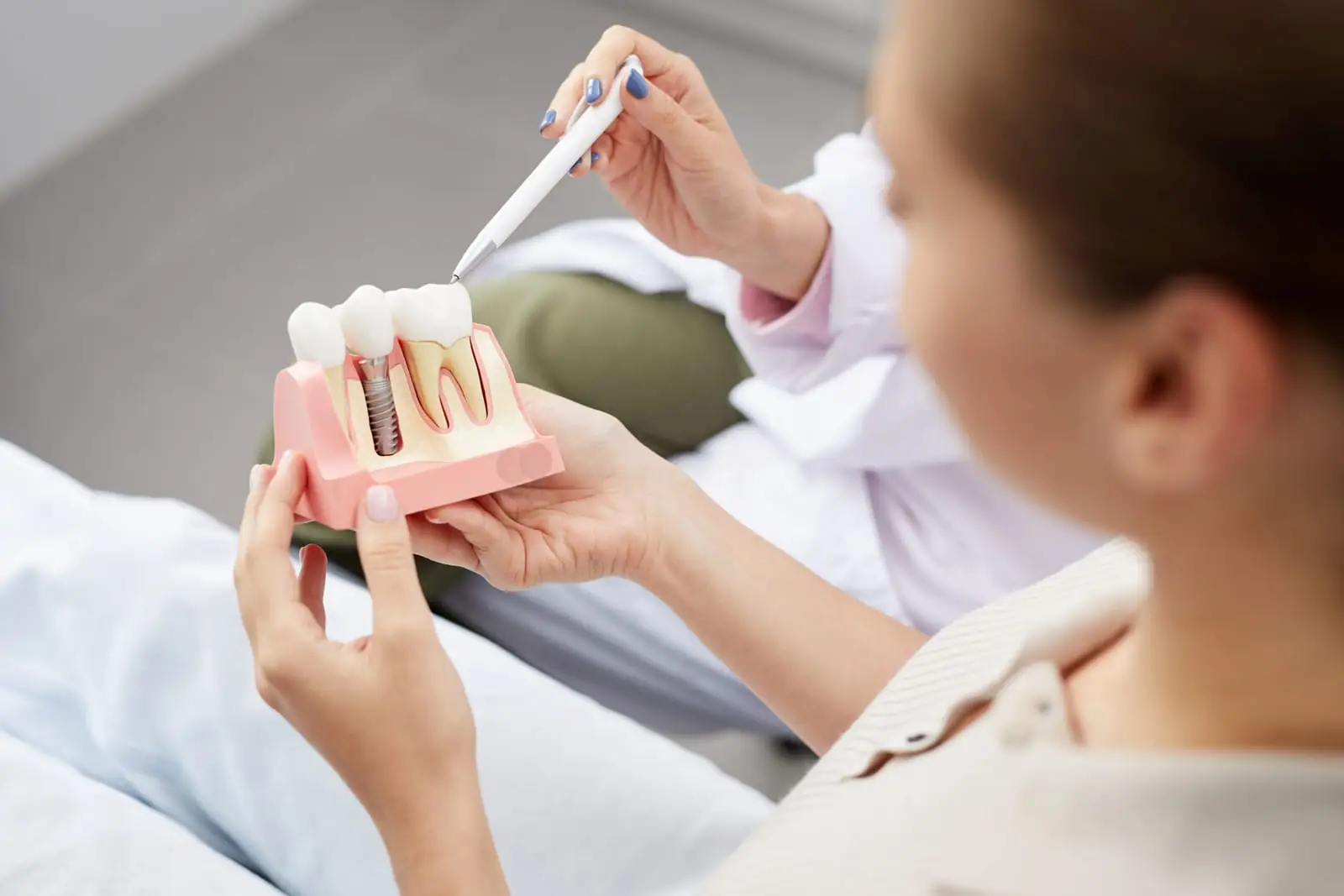
- Bridge
- Fixed, weeks to complete, irreversible enamel removal; five to 15 years (Cleveland Clinic).
- Partial denture
- Removable, no surgery or tooth reduction, lowest cost for multiple gaps; clasps and movement.
- Full denture
- Lowest cost per arch; seven to 10 years with relines every one to two years (Cleveland Clinic).
- Maryland bridge
- Bonded wings, minimal drilling, front teeth only (Cleveland Clinic); good for patients under 18.
- Doing nothing
- Neighbors drift, opposing teeth over-erupt, bone shrinks — later treatment gets harder.
- Mini implants
- Narrow posts for denture stabilization or tight spaces; limited indications.
On this page
The short answerLink to this section: The short answer
Implants are not the only way to replace a missing tooth, and they are not always the best one. The realistic alternatives are a fixed bridge, a removable partial denture, a full denture, a resin-bonded (Maryland) bridge for certain front teeth, and — less often a good idea — leaving the space alone. Mini implants occupy a narrow niche. The better choice depends on the neighboring teeth, the bone, your health, your timeline, and your budget.
Fixed bridgeLink to this section: Fixed bridge
A traditional bridge crowns the teeth on either side of the gap and suspends an artificial tooth between them. It is fixed, finished within weeks, avoids surgery, and is more likely than an implant to get some insurance help. Its costs are the enamel removed from the anchor teeth — which Cleveland Clinic notes is irreversible — the need to clean under the span daily, and a lifespan the clinic gives as five to 15 years. It is often the right choice when the anchor teeth already need crowns. The full comparison is in implants vs. bridges.
Removable partial dentureLink to this section: Removable partial denture
A partial replaces one or several teeth with a gum-colored base and metal or flexible clasps that grip remaining teeth. MouthHealthy describes removable bridges of this kind as ones the patient can take out and clean. A partial is usually the least expensive option for multiple gaps and requires no surgery and no tooth reduction. The trade-offs are movement, clasps that can show, food trapping, and pressure on the teeth it clasps. It comes out at night for cleaning. Partials are a common interim solution while someone saves for implants or waits for a graft to heal.
Full dentureLink to this section: Full denture
When all the teeth in an arch are missing, a conventional full denture rests on the gums. It restores appearance and some function at the lowest cost. MouthHealthy describes an adjustment period and a daily care routine; Cleveland Clinic gives an average lifespan of seven to 10 years with a reline every one to two years, and notes that the jaw continues to shrink after tooth loss. The comparison, including the implant overdenture middle path, is in implants vs. dentures.
Resin-bonded (Maryland) bridgeLink to this section: Resin-bonded (Maryland) bridge
A Maryland bridge is an artificial tooth with thin wings bonded to the back of the neighboring teeth, with little or no drilling. Cleveland Clinic describes it as using metal wings instead of crowns and notes it is typically for front teeth because it lacks the strength for back-tooth chewing forces. It is conservative and comparatively inexpensive, which makes it a frequent choice for a missing front tooth in a young patient who is not yet old enough for an implant — Cleveland Clinic lists a minimum age of 18 with completed growth. The wings can debond and need re-cementing, and the bite must allow room for them.
Doing nothingLink to this section: Doing nothing
Leaving a gap is sometimes reasonable for a short while, particularly a back molar with no opposing tooth. Left long-term, three things tend to happen. Neighboring teeth drift and tilt into the space, the tooth above or below it grows toward the gap, and the bone that held the missing root shrinks because nothing stimulates it. Each of these makes later treatment harder: tilted neighbors complicate bridge design, and lost bone can mean bone grafting before an implant. A tooth lost to infection also raises the question of whether the site has healed; how long after an extraction an implant can be placed explains the timing.
Mini implantsLink to this section: Mini implants
Mini implants are narrower-diameter posts, often placed with less surgery and used mainly to stabilize a lower denture or in spaces too narrow for a standard implant. They can be a reasonable option for some patients with thin ridges who cannot or do not wish to graft. They are not a like-for-like substitute for standard implants under single crowns or fixed bridges, and the long-term evidence for use under heavy chewing load is more limited. Ask the dentist specifically why a mini implant is being proposed and what the standard-implant route with grafting would involve.
When an alternative is genuinely the better choiceLink to this section: When an alternative is genuinely the better choice
- The anchor teeth already need crowns. A bridge restores three teeth in one step.
- Health makes surgery unwise. Cleveland Clinic lists unmanaged diabetes, untreated gum disease, and active smoking among reasons a person may not be a good implant candidate. See who is a candidate and diabetes and implant candidacy.
- The patient is still growing. Implants wait for jaw growth to finish; a Maryland bridge or partial holds the space.
- Bone is inadequate and grafting is declined. A bridge or partial does not depend on the ridge.
- Time is short. A bridge or partial can be done in weeks; an implant takes months.
- Budget is fixed. A partial or conventional denture can be made now and upgraded later; many overdentures start as conventional dentures.
When an implant is still worth the extra stepsLink to this section: When an implant is still worth the extra steps
If the neighbors are healthy, the site has or can be given adequate bone, and you want a replacement that behaves like a tooth and — as the American Academy of Implant Dentistry describes it — preserves natural bone, an implant is usually the more durable answer. Cleveland Clinic states the implant itself can last a lifetime with proper hygiene, against five to 15 years for a bridge and seven to 10 for a denture. The single-tooth implant guide and the implant process explain what is involved.
Getting an honest comparisonLink to this section: Getting an honest comparison
The most useful consultation is one where the dentist lays out at least two options with the trade-offs and costs for each. A free consultation at Beachside Dental Group in Huntington Beach includes full-mouth X-rays and an examination, which is enough to say whether a bridge, a partial, or an implant fits your mouth — and to produce a written, itemized plan for whichever you choose. If cost is the deciding factor, read what drives implant cost first. Request a consultation.
Benefits
- Several alternatives avoid surgery entirely
- Bridges and partials can be completed in weeks
- A Maryland bridge preserves nearly all enamel on the neighbors
- A partial or denture can be upgraded to implant support later
- Alternatives are generally lower in upfront cost and more often insured
Limitations & considerations
- Bridges and dentures do not stop bone loss at the gap
- Removable options move, trap food, and need nightly cleaning
- A traditional bridge permanently alters the anchor teeth
- Leaving a gap usually makes eventual treatment more complex
What the process looks like
Exam and imaging
The dentist checks the neighboring teeth, gum health, and bone at the site.
Options explained
At least two routes are laid out with trade-offs for your specific mouth.
Written comparison
Each option is itemized so cost, timeline, and longevity can be compared.
Interim solution if needed
A partial, flipper, or Maryland bridge can hold the space while you decide or heal.
Upgrade path
If you choose an alternative now, the plan notes what a later move to implants would involve.
Is it right for you?
An alternative deserves serious consideration when the anchor teeth already need work, surgery is unwise, growth is incomplete, bone is limited without grafting, time is short, or budget is fixed.
Often a good fit
- Neighbors with large fillings or aging crowns (bridge)
- Young patients missing a front tooth (Maryland bridge)
- Multiple gaps on a limited budget (partial)
Worth discussing first
- Healthy, unrestored neighbors — a bridge sacrifices enamel unnecessarily
- A single missing back molar under heavy load — a Maryland bridge is not strong enough
- Long-term gaps left untreated
Questions people ask
What is the cheapest way to replace a missing tooth?
Usually a removable partial denture, followed by a Maryland bridge for a front tooth and a traditional bridge. Implants cost more up front. The cheapest option now is not always the cheapest over twenty years, so ask for a written comparison.
What happens if I just leave the gap?
Over time neighboring teeth tend to drift and tilt into the space, the opposing tooth can grow toward it, and the bone that held the root shrinks. Each of these makes later treatment more complex and may mean grafting before an implant.
Is a Maryland bridge a good option for a front tooth?
Often, especially for younger patients or anyone who wants to avoid drilling the neighbors. Cleveland Clinic notes it is typically for front teeth because it cannot withstand back-tooth chewing forces. The wings can debond and may need re-cementing.
Are mini implants as good as regular implants?
They serve a narrower purpose — mainly stabilizing a lower denture or fitting tight spaces — and are not a like-for-like replacement for standard implants under crowns or bridges. Ask why a mini is proposed and what the standard route would involve.
Can I start with a partial and get an implant later?
Yes, and it is common. Be aware that bone at the gap continues to shrink while the partial is worn, so a later implant may need grafting. A consultation can estimate how much time is reasonable.
Why might a dentist recommend a bridge over an implant?
Most often because the neighboring teeth already need crowns, bone is limited without grafting, health factors make surgery unwise, or the timeline is short. Those are legitimate reasons, and a good consultation explains which applies to you.
Sources
This guide is general dental education and not a substitute for an examination or diagnosis. Treatment recommendations always depend on your individual evaluation at an affiliated office. How it was written and sourced: editorial policy.
Where the consultation happens
Two affiliated offices in Huntington Beach

Beachside Dental Group
Huntington Beach

Pacifica Dental
Huntington Beach
Also in the network: Marina Dentistry (Marina del Rey) and Rio Hondo Dental (Downey).
Talk through implant alternatives with a dentist
Request a consultation at an affiliated Huntington Beach office. You'll leave with an itemized, written plan — and no obligation to proceed.